


How to Drive in Winter (Without White-Knuckle Panic)
- Mike Stamp
- Dec 30, 2025
- 4 min read


Winter driving has a funny way of humbling even the most confident motorists. One minute, you’re cruising along feeling very capable. The next? The road’s turned into an ice rink, visibility’s gone full Silent Hill, and you’re wondering if walking would’ve been the better life choice.
Snow, ice, fog, early sunsets — winter throws the whole box of tricks at us. But here’s the good news: with a bit of prep, a calmer mindset, and a few smart techniques, winter driving doesn’t have to feel like an extreme sport.
Put the bravado away. Grab a brew. Let’s talk about how to get through winter driving safely — and with your dignity intact.
Step one: ask yourself,
“Do I really need to go?”
Before we even touch the car keys, check the forecast. If heavy snow or ice is on the cards and your journey isn’t essential, there’s no shame in postponing. Staying put is often the safest decision you can make.
Reliable forecasts from BBC Weather or the Met Office can help you plan ahead — or convince you that the sofa is, in fact, the correct destination.
If you do need to head out, plan smarter. Stick to main roads where possible; they’re more likely to be gritted and cleared than that quiet shortcut you normally love.
Clear everything. Yes, everything.

This is not the moment for “that’ll do”.
Scrape ice from all windows, mirrors, and lights. Clear the roof too — because snow sliding down onto your windscreen when you brake is not the jump scare anyone needs at 7:45am.
Demist properly before moving off. If your car has air conditioning, use it — it clears moisture faster and helps stop the windows misting up again. Wait until the fan’s blowing warm air and you can see clearly all round. Those extra two minutes matter.
Electric car? Use pre-conditioning
If you’re driving an EV with a pre-conditioning feature, this is where it shines. Warm the cabin and battery while the car’s still plugged in. You’ll start your journey comfortable and maximise range — a small win that feels huge on a freezing morning.
Space is your winter superpower
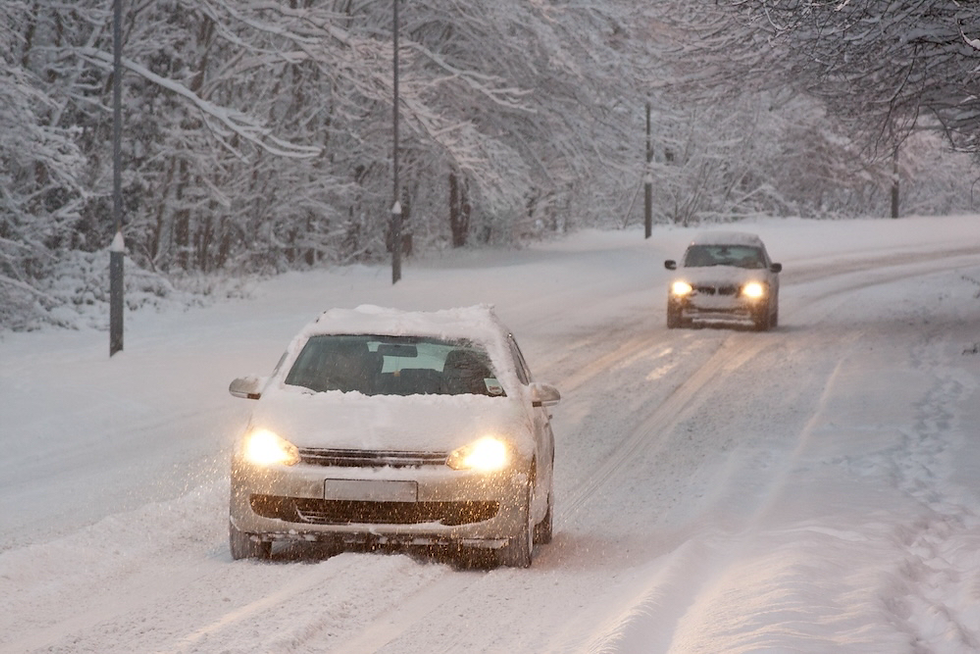
On snow or ice, stopping distances can increase up to ten times. That gap you usually leave? Triple it. Maybe quadruple it. More space means more time — and time is everything when grip is limited.
Hills deserve special respect:
Going uphill: wait until the road ahead is clear, pick a low gear, and keep a steady speed without changing gears mid-climb.
Going downhill: slow before the descent, select a low gear, and let engine braking do the work. Use the brakes gently and only if necessary.
On the flat, be smooth. No sudden acceleration. No sharp braking. Pretend there’s a cup of tea on the dashboard and you don’t want to spill it.
Higher gears, calmer inputs
Driving a manual? Pulling away in second gear can reduce wheelspin on slippery surfaces. Ease off the clutch gently and let the car find grip.
Once moving, use higher gears than usual to keep engine torque low. Automatics may have a winter or snow mode — worth a glance in the handbook.
This isn’t about speed. It’s about control.
Skidding: what actually helps

First rule: don’t panic. Easier said than done, yes — but panic inputs make things worse.
If the car starts to skid, steer into it. Rear sliding right? Turn the wheel right. Avoid braking unless absolutely necessary and keep your movements smooth.
Modern stability systems help massively, but they work best when you’re calm and measured.
What should you carry in winter?

Think of this as your “just in case” kit:
De-icer and ice scraper
Warm clothing and a blanket
Torch
Phone charger
Water and snacks
High-visibility jacket
Hopefully you’ll never need it. But if you do, you’ll be very glad it’s there.
Should you fit winter tyres?
If you regularly drive in cold conditions, winter tyres are worth considering. They’re designed to stay flexible in low temperatures and offer far better grip on snow and ice.
They’re not essential for everyone — but if you live in a rural area or cover a lot of winter miles, they can make a noticeable difference.
The cars that cope best? It’s about tech, not bravado
Modern cars — from superminis like the Skoda Fabia to family estates like the Mercedes C‑Class Estate — are packed with systems designed to help in poor conditions.
Traction control, stability control, ABS, and driver-assist tech all work quietly in the background to keep things predictable. Even stylish newcomers like the Volkswagen Tayron focus as much on safety as comfort.
No car is invincible, of course — but good tyres, sensible driving, and modern safety tech are a very reassuring combination.
Final thought: slow is smooth, smooth is safe
Winter driving isn’t about proving anything. It’s about getting where you’re going safely, calmly, and without drama.
Take your time. Leave space. Be gentle with the controls. And if conditions feel beyond your comfort level? Trust that instinct. Turning back or waiting it out is always the smarter option.
Because arriving ten minutes late is annoying.
Arriving safely? That’s the real win.


Comments